
The Intervals Story
A history of how our web design and development agency evolved and built workflow management software used throughout the world today.
In the Beginning…
Our story begins in August 2000, when Pelago started out as a web design and development agency. Over the first few years, and having worked with over 100 clients on well over 300 projects, we experimented with several different time tracking and task management methodologies and applications. We tried everything — paper timesheets, Excel spreadsheets, Open Source software, and commercial web-based apps.
The search continued for a few years. Everything we tried was either too simple or too complex. We could not find a solution.
Then we had a project spin out of control due to uncontrolled scope creep. When the dust settled and we tallied up the totals, we learned we had lost a significant amount of money. That was our light bulb moment, in June 2005, when we realized we needed to stop searching and start building.
Where We Went From There
We spent the next few months building Intervals in between client projects. A few hours here, a few there. All of our past experiences, the good and the bad, were distilled into a software service that was the perfect blend of time tracking, task management workflows, and reporting features.
Once we got it deployed, this unique combination of features made it easier for people to track their time and gave us the data we needed to generate rich, granular reports for us and our clients. Intervals quickly became a dashboard for our entire business, helping us gauge the health of each project and our agency's profitability.
Onward and Upward
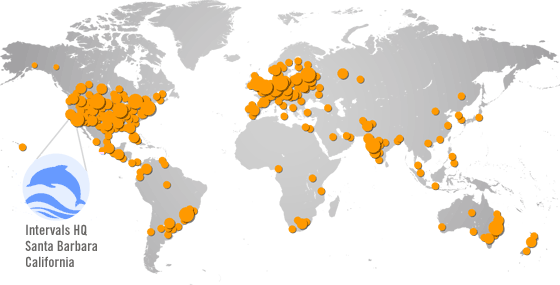
We knew there was a need for Intervals but we had no idea the need would be so global and diverse. Today, Intervals is used by small businesses in over 100 countries, and continues to grow. In 2021 we proudly celebrated Intervals hitting its 15 year milestone.
We originally built Intervals to solve the unique problems faced by web designers and developers. However, we deliberately built Intervals to have enough flexibility to accommodate other service-based businesses. Our customers today include web designers, web developers, consultants, creative agencies, IT shops, marketing agencies, PR companies, Manufacturing and Engineering, Construction Management, and more.
We still use Intervals every day to manage every aspect of the Intervals design and development process. Intervals is a real tool built by real people who face the same daily challenges.
Pelago is headquartered in Santa Barbara, California, between mountains and ocean. We are bootstrapped and profitable, and fortunate to live, work, and play in a city visited by people from all over the world. And we are equally as fortunate to interact with customers throughout the world every day of the week. We are committed to listening to our customers and helping them tackle day-to-day workflow challenges, so that we can continue to improve Intervals.
Learn more about our customers or try Intervals free for 30 days
Additional Information
- Pelago founded in 2000
- Intervals launched in 2006
- Customers in over 100 countries
- Over 207,900,716 hours tracked
- Over 14,129,302 tasks managed
Pelago Paper Timesheet
The paper timesheet that started it all.